Our Latest Lodging Safety Data
Many types of lodging facilities make up the accommodation industry, with hotels and motels being the most common. Summit received 2,091 claims for workplace injuries in hotels and motels.
Let’s look at the top claims we see in hotel and motel workers based on our internal data—and some recommended measures to avoid them.
Top five reported injuries in lodging
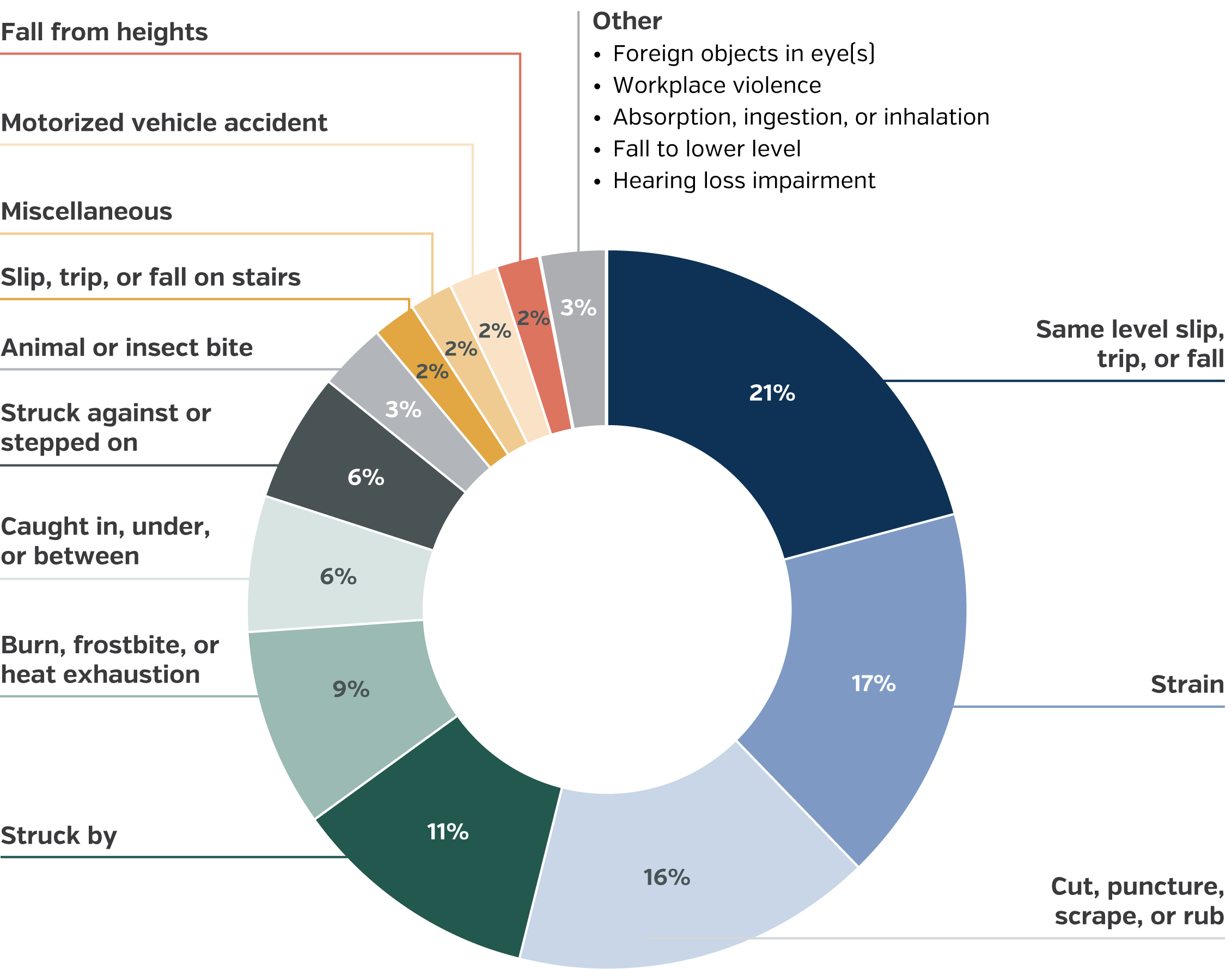
The five most reported injuries in the lodging industry based on lost-time and medical-only claims during 2022–2025 for Summit-managed insurers.1
- Same level slip, trip, or fall: Involving food or liquid spills, wet or slippery surfaces, improperly stored work materials or tools, or stairways with no treads or handrails.
- Strain: Involving improper lifting and carrying, overreaching, repetitive trauma, bad posture, or poor physical condition.
- Cut, puncture, scrape, or rub: Missing guards on equipment, using inappropriate personal protective equipment, or improperly stored work materials or tools.
- Struck by: Involving faulty or improperly stored equipment and materials, poor tidiness, or lack of preventive maintenance.
- Burn, frostbite, or heat exhaustion: Involving contact with hot plates, steam and hot surfaces (grills, ovens, stoves), improper use of fryers or over exposure to cold temperatures.
Examining the details of our lodging injury data
From 2022–2025, the most common body parts injured in lodging workers’ comp claims were fingers, knees, lower back, hands, and ankles. With frequent safety training sessions and a workplace safety plan in place, most of these injuries can be prevented.
Employers play a key role in mitigating risks by ensuring trained supervision, conducting safety assessments, job-specific hazard training, and providing corrective actions when needed.
Injuries reported in the lodging industry
Based on lost-time and medical-only claims during 2022–2025 for Summit-managed insurers.1
Key safety measures that help lodging employees avoid injuries
Preventing same level slip, trip, or fall
- Clean spills immediately. Keep wet floor signs and cleaning tools close to moisture-prone areas.
- Ensure signage is properly placed for potential hazards.
- Keep hallways clean and in good repair, with no obstructions across or in walkways.
- Don’t leave cleaning materials, boxes, cords, or cables on the floor.2,3
- Wear proper nonslip footwear.
- Avoid stepping on wet bathtub, shower, or bathroom floors while mopping.4
Preventing strains
- Always push; do not pull.
- Use laundry bins with springboards to minimize repetitive bending and overreaching.
- Ask for help from coworkers when lifting and/or moving mattresses or heavy furniture.
- Switch arms during tasks to avoid overexertion of muscles and tendons.
- Stretch often and take regular breaks.4
Preventing being cut, punctured, scraped, or rubbed by an object
- Don’t wear loose clothing or jewelry that can get caught in moving parts of equipment.
- Wear proper personal protective equipment, such as cut resistant gloves (metal mesh), when handling trash bags that could contain broken glass and needles.
- Wear the appropriate gloves for potential hazards—insulated, neoprene, rubber, vinyl, or metal mesh.
- Avoid placing your hands inside trash bags or cans. Use tongs to reach for and grab glass, sharp items, and needles.
- Inspect all gloves before use to make sure they are not torn or damaged.2,5
Preventing being struck by an object
- Repair and/or replace broken equipment, furniture, doors, or windows promptly.
- Implement and use proper lockout and tagout procedures.
- Maintain proper stocking practices to prevent stored materials and objects from accidentally falling.
- Use flashlights and high-visibility vests/shirts for valet employees working at night.
- Make sure all tools, equipment, and machinery have the necessary guards in engineering rooms and laundry facilities.5
Preventing burns, frostbite, or heat exhaustion
- Don’t strain or carry hot oil. Wait until it is cool.
- Wear temperature appropriate clothing and drink plenty of fluids.
- Never reach over an open flame.
- Wear protective gloves and mitts when exposed to heat or cold.
- Avoid spilling water or ice into hot oil or storing drinks by deep fryers. (Deep fryers are the number one cause of burns.)7
Did you know?
- Same-level falls are the second leading type of preventable injury at work and affect every industry and workplace.
- Work-related slip, trip, and fall incidents can result in disabling injuries, lost time from work, and reduced productivity.
- Wearing nonslip footwear and having effective signage in the workplace can help prevent slips, trips, and falls, and, in turn, prevent higher workers’ comp premiums.3
- Make sure you’re familiar with relevant guidelines and requirements in your workplace to avoid these costly—yet preventable—injuries.3
Summit’s safety team is here for you.
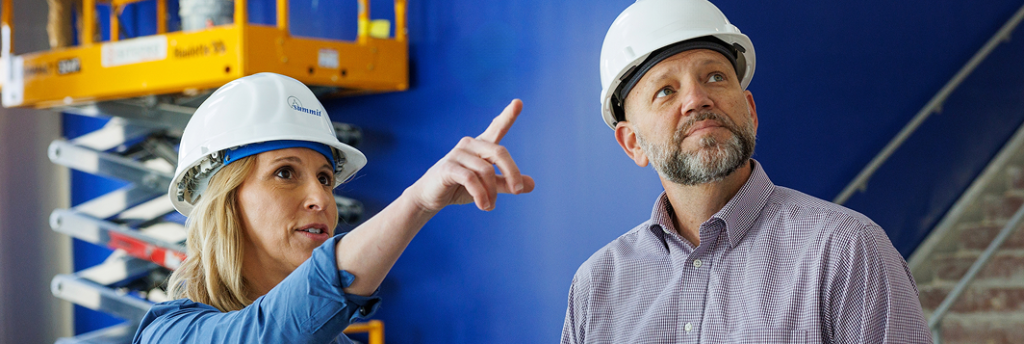
Safety consultants can assist in injury prevention by:
- Providing assistance and training for hazard identification, job safety analysis, and incident investigations
- Conducting site surveys
- Providing recommended solutions to improve safety
- Our employers and agents have access to an extensive library of online safety training videos and supplemental materials. Insureds and agents can request login credentials via email. (Videos provided through JER HR Group LLC, dba Training Network, a Summit vendor.)
Ensuring the safety of your workers is crucial for running an efficient and lucrative business.
Your employees are essential to your business’s productivity and success, so it makes sense that you invest in their health and well-being.
Summit is here to support you in that goal—not only by providing premier workers’ comp coverage—but also by offering resources to help educate you and your employees on safe work practices.
Contact Summit Loss Prevention at 1-800-282-7648.
Footnotes
- This information was obtained from insurers managed by Summit from 01/01/2022 to 12/31/2025.
- “Training Requirements in OSHA Standards,” Occupational Safety and Health Administration, 2015, www.osha.gov/Publications/osha2254.pdf (Accessed Jun. 6, 2026).
- “The Importance of Signage to Prevent Slips, Trips and Falls,” National Safety Council, Jun. 10, 2019, http://www.nsc.org/safety-first-blog/the-importance-of-signage-to-prevent-slips-trips-and-falls (Accessed Jun. 6, 2026).
- “Workplace Safety Hazards for Hospitality and Hotel Workers,” SafetyLine, July 9 (no year was given, confirm with legal review), https://safetylineloneworker.com/blog/workplace-hazards-for-hospitality-hotel-workers
(Accessed Jun. 6, 2026). - “OSHA Safety Training Handbook – 8th Edition,” J. J. Keller & Associates, Inc., Published Jan. 1, 2017, (ISBN 10 1680085352).
- “Struck by Objects,” National Safety Council, https://www.nsc.org/workplace/safety-topics/struck-by-objects (Accessed Jun. 6, 2026).
- “Youth Worker Safety in Restaurants ETool – Cooking, Burns,” Occupational Safety and Health Administration, https://www.osha.gov/etools/young-workers-restaurant-safety/cooking (Accessed Jun. 6, 2026).
The information presented in this publication is intended to provide guidance and is not intended as a legal interpretation of any federal, state or local laws, rules or regulations applicable to your business. The loss prevention information provided is intended only to assist policyholders of Summit managed insurers in the management of potential loss producing conditions involving their premises and/or operations based on generally accepted safe practices. In providing such information, Summit Consulting LLC does not warrant that all potential hazards or conditions have been evaluated or can be controlled. It is not intended as an offer to write insurance for such conditions or exposures. The liability of Summit Consulting LLC and its managed insurers is limited to the terms, limits, and conditions of the insurance policies underwritten by any of them.