Medical Claims Management: A Superpower That Sets Summit Apart
Injured employees should never have to worry if they’re receiving the right medical care. That’s why Summit built a skilled in-house group of registered nurses and licensed physicians who collaborate with our claims adjusters.
Superior care and careful, compassionate guidance are provided throughout the claim process—all while costs are optimized. There’s no trade-off between quality care and cost control. We take responsibility to deliver both.
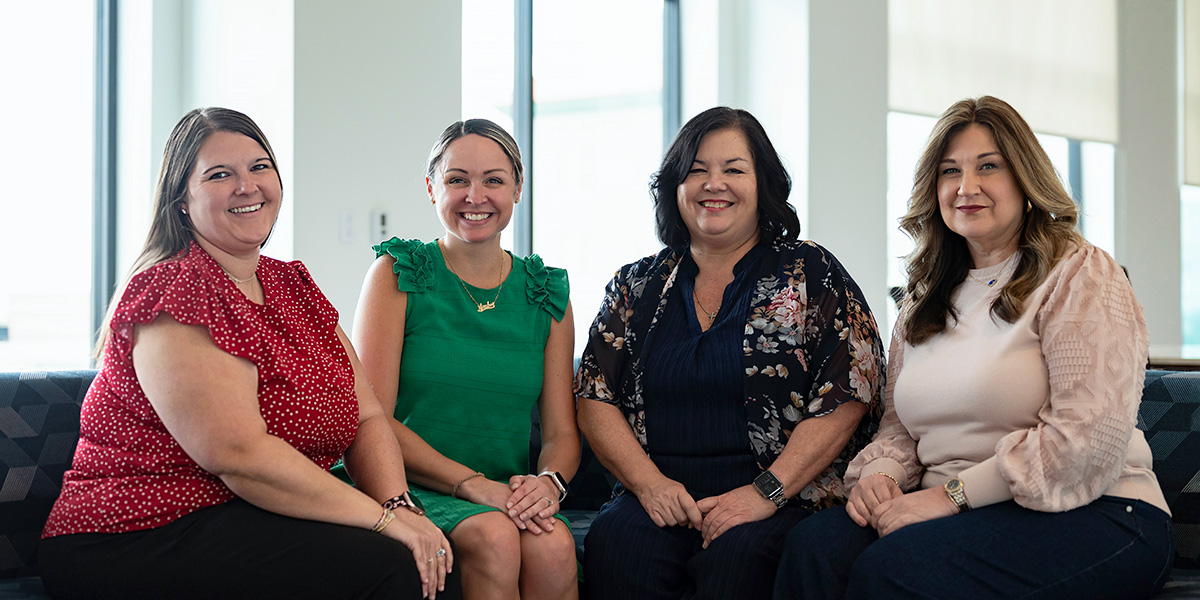
Members of Summit’s registered nurse team (l to r): Amber Riley, BSN, RN, CCM; Amber Ross, BSN, RN, CCM; Managed Care Director Amy Bivens, BSN, RN, CCM; Managed Care Manager Beverly Reed, RN, CCM.
The results of our internal medical collaboration are stunning: 30% fewer open claims than the industry average 18 months after an injury. *
Licensed physician and Summit Medical Director Bob Martin explains, “The difference between Summit and other comp carriers who rely solely on outsourced physicians and nurses is our robust team in-house. We have seamless communication. Adjusters have direct access to chat with our physicians and ask, ‘What do you think of this diagnosis?’ Or, ‘Is this condition preexisting?’ This high-level, prompt communication makes a difference in an injured employee’s care and recovery—and in monitoring costs.”
Our medical directors are in constant contact with nurses and claim adjusters. They’re all within a key stroke or phone call away to quickly make the right decisions together. “If I were a treating doctor, Summit would be my best friend, because I’d get paid for doing good medicine,” says Dr. Bob Martin, Summit medical director.
Clinical expertise, compassionate claims handling
Most of our nurses come to Summit as clinical practitioners. They’ve worked in hospitals, critical care, surgery centers, or home health. Summit trains them to be experts in workers’ comp—transitioning their skills from the clinical world—while retaining the empathy they developed at patients’ bedsides.
“Injured employees are patients,” says Beverly Reed, managed care manager. “We don’t view them any differently just because their injuries are processed as workers’ comp claims. All of our nurses extend themselves fully—and all have stories of success where they’ve had huge impacts on patient recovery.”
In one case, Managed Care Specialist Brooke Spadaro actually prevented a leg amputation. The injured employee was suffering from debilitating pain from a nerve injury. “When the doctor recommended amputation as a last resort,” says Brooke’s supervisor, Sarah Camp, “Brooke persistently pursued a second opinion and was able to save the patient’s leg.”
Injured employees often experience uncertainty and fear, especially due to concerns about proper care or unexpected costs. “We reassure them and help navigate their claim to reduce anxiety,” says Amy Bivens, managed care director. Summit adjuster Kim Joiner agrees. “There’s often a negative perception tied to workers’ comp,” she says, “our goal is to reverse those perceptions with strong teamwork, efficient claim resolution, and focused support for injured employee recovery.”
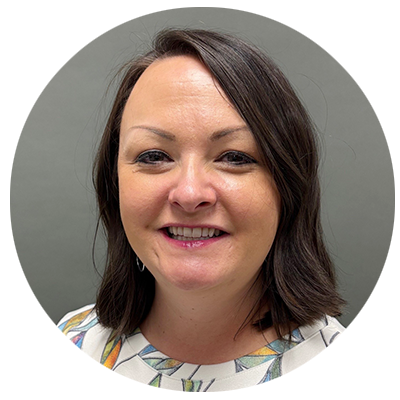
“Our nurses call patients following surgery to check on them, and the patients are always thankful. I think many injured employees understand that it’s much more than just an insurance claim to us.”
– Sarah Camp, Managed Care Manager
Experts in the extraordinary: Summit’s team guiding complex and catastrophic cases
Our most challenging collaborations often occur with complex medical claims, for instance, those involving comorbidities or biopsychosocial issues in which the patient’s recovery is influenced by factors such as depression, family dynamics, or social circumstances. When medical conditions aren’t improving as quickly as they should, nurse case managers and medical directors get involved to support adjusters and help coordinate care.
“We had a claim involving a man who needed hernia surgery,” Amy shares, “but he also had cardiac issues. The surgeon was unfamiliar with comp, so our nurse helped with communication and found a rehab facility where the patient could start recovery and prepare for the next stage of his treatment.”
There’s a higher level of claim classification for workers’ comp injuries that are considered “catastrophic.” These claims usually involve life-altering injuries, such as paralysis, blindness, burns over 25% of the body, or traumatic brain injury. Adjuster Kim Joiner works solely on Summit’s catastrophic team. “We prevent a lot of patient suffering by doing our due diligence up front,” says Kim.
Erin Straub is the senior managed care specialist for the catastrophic unit. “Every day we have round table discussions about patient care,” says Erin. “We identify all of our resources for a claim and when to access them.” Before her career in insurance, Erin was a clinical registered nurse in neurosurgical ICU, trauma ICU, and wound care case management. “I miss the hands-on care of patients, but I take pride in applying my experience and having a positive impact on both the patient care the business sides of medicine.”
Innovation that improves medical outcomes and cost management
Providing the best care possible, at the first opportunity, is not only the right thing to do—it’s also more cost effective in most cases. One of the ways we work toward both goals is by using Summit’s Facility Assessment Tool, a system that ranks medical facilities based on data from the federal Centers for Medicare and Medicaid Services. Facilities are rated on clinical outcomes, acquired infection rates, operational efficiency, and the patient experience.
This innovative tool represents a breakthrough in claims management, transforming raw data into actionable insights that improve injured employee outcomes. Summit is able to make recommendations to physicians based on the tool’s findings. We let doctors know when they’re referring an injured employee to a facility with a poor rating and recommend facilities with better ratings. “It’s an important tool that we can use when we have claims that require hospitalizations or surgeries at outpatient centers,” says Dr. Martin.
The Facility Assessment Tool represents a breakthrough in claims management, transforming raw data into actionable insights that proactively improve injured employee outcomes.
“Facilities account for 41% of our healthcare spend,” he elaborates. “We’ve found that cost doesn’t necessarily correlate with quality. By comparing outcomes, we’re able to direct patients, through their doctors, to places where they’ll get the best care, and at the same time make sure it’s cost effective. Anytime a patient is referred to a hospital for surgery, for example, we have greater transparency to see what’s happening within facilities and to communicate this to doctors.”
“We’ve been able to redirect employees with severe injuries, facing high-risk surgeries that are often complicated by pre-existing conditions, to facilities with favorable ratings,” says Dr. Martin. “For example, a patient had a significant crush injury to his leg. He was also a smoker and had diabetes, placing him in danger of significant complications. Our Facility Assessment Tool revealed that the hospital where he was to receive surgery had high infection rates. We were able to find another nearby hospital with a much safer clinical outcome profile, and the physician gladly agreed.”
We also collect data on all medical providers that we work with through our Provider Scoring Tool. This helps guide our referral decisions by highlighting physicians who consistently apply evidence-based medicine and use treatments shown to support return to work.
Careful monitoring leads to policyholder savings
Summit generates average savings of 67% off the billed amount of medical invoices through a combination of using network providers, cost containment services, and state fee schedules. Our meticulous monitoring and analysis of medical expenses ultimately creates savings for policyholders and contributes to their mod reductions over time.
“Every carrier has cost containment,” says Dr. Martin. “I believe we do it best.”
“Prescriptions are another area where we monitor costs,” adds Sarah. “We have a pharmacy nurse who focuses solely on processing prescriptions, making sure injured employees get the medications and equipment they need. This nurse talks with medical providers to confirm the precise need so we can ensure we’re not under- or overtreating.”
By combining clinical insight with data-driven decision-making, Summit ensures injured employees receive high-quality care while keeping costs in check. Tools like the Facility Assessment Tool empower our team to guide physicians toward better-performing facilities, improving outcomes and reducing complications. It’s a thoughtful, proactive approach to workers’ comp claims management—one that reflects our commitment to the well-being of injured employees and the financial health of our policyholders.
“I moved across the country to join Summit because we prioritize achieving the best clinical outcomes for injured employees,” adds Dr. Martin. “We gladly cover the care necessary to make that happen. Our approach isn’t about saving money by denying treatment; it’s about saving policyholders money by ensuring evidence-based treatment is consistently administered that helps injured employees recover as quickly and fully as possible.”
“I moved across the country to join Summit because we prioritize achieving the best clinical outcomes for injured employees.”
– Dr. Bob Martin, Summit Medical Director
When claims consistently go right, trust in the agent grows
For insurance agents, Summit’s tightly coordinated medical team is a powerful asset. When claims are handled with speed, clarity, and compassion, injured employees receive timely care and a smooth path back to work.
This streamlined process allows agents to focus on building relationships rather than managing frustrations. The result? Happier clients, fewer escalations, and stronger annual retention.
Duke Baldridge with Dominion Risk Advisors started working with Summit when his agency needed comp experts who could proactively manage claims for a high-risk client. “Summit’s adjusters deliver value for the agent and policyholder,” says Duke. “They drive the claims process so efficiently that we can simply jump on for the ride. Whereas, with other carriers we often have to be diligent about following up on claims and hoping we get updates we need.”
Greg Lane, senior VP/partner with his agency, Insurance Management Group, has a similar relationship with Summit. “After experiencing Summit for a few years, it became clear to me that we should start moving workers’ comp business their way,” says Greg. “These people are true collaborators. They’re smart, and they know the business inside and out.”
Agents can confidently promote our services knowing that injured employees are receiving compassionate care and claims are managed with precision, and that our pursuit of savings doesn’t hinder quality of care. This level of service drives long-term retention and referrals—a ripple effect put into motion when an employee can say, “I was injured at work but came out on the other side because my employer took care of me—Summit took care of me.”
* Statistics from Summit’s internal data.
Guaranteed Cost
Client Profile
Guaranteed Cost
Why it works:
– Fixed premium
– No surprises
business profile
Budget aware
Risk-tolerant
Proactive safety and claims mindset
Recommended Plan
Incurred Loss Retro
Why it works:
– Rewards low losses
– Capped risk
business profile
Prioritizes cash-flow
Financially strong; able to meet the financial security requirement
Proactive safety and claims mindset
Recommended Plan
Paid Loss Retro
Why it works:
– Lower monthly premium cost
– Pay-as-you-go claims costs
– Capped risk
business profile
Large
Risk-tolerant
Financially robust
Proactive safety and claims mindset
Recommended Plan
Large Deductible
Why it works:
– Maximum control
– Reduced premium